
Understand Your Cancer.
Explore Your Options.
Feel More in Control.
We help you and your treating team understand your cancer at a deeper level — combining pathology, genomic findings and the latest clinical evidence to explore personalised treatment options.

Answers.
More Possibilities.
A Brighter
Tomorrow.



How Dr PreZiGen Helps You
A clear and supportive process from your reports to a personalised interpretation.
Share Your Reports
Pathology, genomic reports and treatment history.
Expert Analysis
Specialists analyse your data with AI-assisted evidence search.
Personalised Interpretation
What the findings mean for your specific cancer.
Treatment Options
Evidence-based options, including trials where relevant.
Consultation & Support
Discuss with our experts and get your questions answered.
What You Will Receive
- Clear explanation of your reports
- Key genomic findings and their meaning
- Treatment options with latest evidence
- Relevant clinical trials (where applicable)
- Questions to discuss with your oncologist
- Summary report in easy-to-understand language
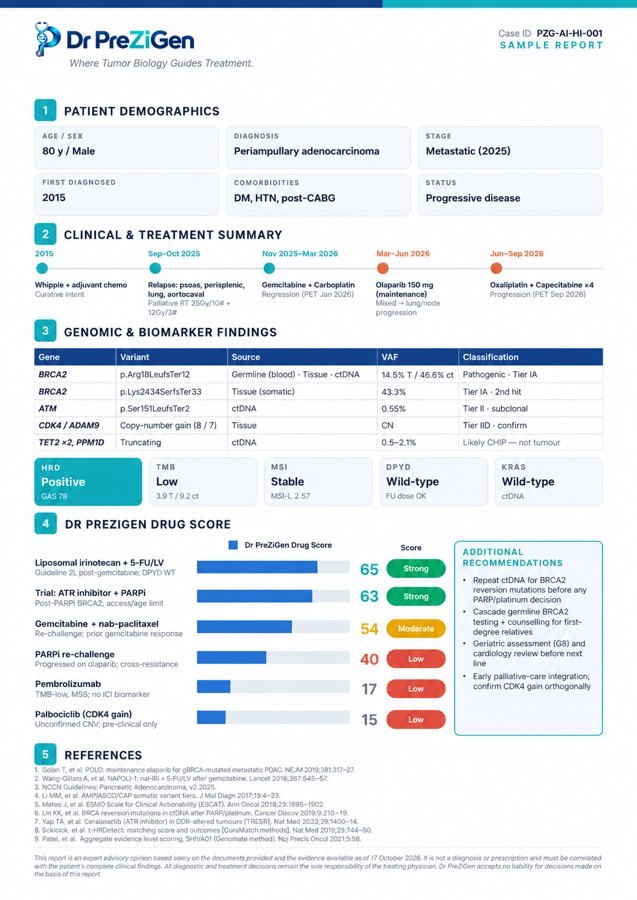
A Real-World Example
See how multiple pieces of information come together to guide personalised treatment options.
View Full Example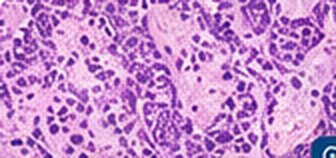
Key Pathology Features
- Adenocarcinoma, acinar pattern
- Glandular structures, tumour cells
- Helps correlate with genomic results and tumour behaviour
How It Helps
Histopathology gives important clues about tumour type and behaviour, and helps interpret genomic results in the right context.
Genomic Findings
- EGFR exon 19 deletion — a common, well-studied driver
- No co-occurring ALK, ROS1 or KRAS driver
- PD-L1 and TP53 status reviewed for context
How It Helps
A single driver mutation can point to a specific family of targeted medicines that work better than standard chemotherapy for that tumour.
What It Means
This EGFR change is a well-established, actionable alteration in lung adenocarcinoma. Guidelines recommend an EGFR-targeted tablet as first-line treatment, and the result also explains why immunotherapy alone is usually less effective here.
- Guideline-preferred first-line EGFR tyrosine kinase inhibitor (e.g. osimertinib), alone or with chemotherapy
- Other EGFR-directed combinations where available
- Repeat testing (tissue or ctDNA) at progression to look for resistance mechanisms
- Clinical trials for specific resistance patterns
- Your tumour's biology, not just its location, guides the choice of treatment
- Bring the summary and questions to your oncologist — final decisions are theirs and yours together
- Testing again later can open new options
Common Questions from Patients
Simple answers to help you feel more informed and prepared.
What is genomic testing and why is it important?
Genomic testing looks for changes in the genes of your tumour (and sometimes in your blood). These changes can explain how the cancer grows and may point to treatments designed to target them.
Will this change my treatment plan?
Sometimes. For many patients it confirms the current plan; for others it reveals a targeted therapy, an immunotherapy option or a clinical trial. Your oncologist decides how to use the findings.
Are there clinical trials for my condition?
We search trial registries for studies that match your cancer type, genomic findings, prior treatments and location, and list the most relevant ones in your report.
Is my data safe and confidential?
Yes. Reports are shared through a secure link, used only for your interpretation, and never shared without your consent.
Stories of Hope
Experiences from patients and families who found clarity through deeper understanding.

"The report helped us understand options we were not aware of. It gave us confidence to discuss with our oncologist."— Patient with metastatic lung cancerIllustrative

"The explanations were clear and easy to understand. It helped our family feel more informed and less anxious."— Caregiver, breast cancerIllustrative
"For the first time, someone explained what each line of the genomic report actually meant for my father."— Son of a patient with colorectal cancerIllustrative
Your Journey Matters
You are not alone. We are here to support you with knowledge, clarity and a more personalised approach to cancer care.
Request a Consultation